Tuesday, May 17, 2011

Tattoos

Tattoos are a postmodern text, allowing individuals to depict imagery, concepts, and adages through an intimate medium of expression. The intertextuality of many contemporary tattoos is a testament to the global village in which we currently live – from album covers to cartoon characters, any product of popular culture may be inscribed upon someone’s skin. The line between art and body becomes blurred as a tattoo becomes a part of one’s perception of life and self. A tattoo alters the way in which an individual may be treated or received by others. Tattoos are ultimately a rejection of authority. The acquisition of a tattoo may be viewed as a desecration of the body’s temple from the perspective of a number of institutions – from academia to the church. In this way, tattoos counter traditional values and beliefs concerning “the individual” as a concept.

Post Secret

In Freudian terms, Post Secret displays the id, ego, and superego through the process of divulging a secret. The keeper of the initial secret preserves an aspect of him or herself as the superego. The superego prevents the compulsive disclosure of potentially embarrassing information. The ego, in this instance, is the sender of the secret. The decision to put pen to paper actualizes the secret in question. The ego struggles between keeping the secret private and revealing the intimate piece of information. The display of the secret upon the Post Secret site takes on the characteristics of the psychoanalytic id. The secret has been disseminated through the will of the ego, giving the releasing the sender’s information. Having the secret displayed openly to an immense audience is a representation of the id. The sender has succumbed to the id’s inclinations by allowing the secret to take a physical form. The act of viewing these confessions is also an act of indulgence, influenced by the viewer’s id.

Nylon Magazine


As any media text marketed towards teenage girls, Nylon magazine incorporates features that are associated with typical feminine interests and values.  Although Nylon is marketed as a forward thinking, stylistically distinctive resource for fashion and pop culture, it falls into the stereotypical trappings of placing focus upon product placement and unattainable imagery. With a chosen “It Girl” of the month, Nylon reinforces the idolatry that young females have developed towards an ideal figure. Females such as Megan Fox, Evan Rachel Wood, Sienna Miller, Lindsay Lohan, and Katy Perry. Predominantly waifish and quintessentially beautiful, the cookie cutter nature of these individuals is undeniable. The format of the magazine places a spotlight upon mediocre actresses and faux musicians who coincidentally may be identified as fashionable and chic. This focus communicates a value of vapidity; aesthetic appeal over a successful and meaningful career. The message seems to be that mediocrity is acceptable as long as one places time, energy, and money upon aesthetic features such as makeup, hair, and clothing. The cover of the magazine particularly enforces the worship and glorification of a goddess figure. Hardly different from the capitalization of the female form found within media texts such as Vogue and Cosmo, Nylon disguises this exploit by modernizing the feminine construction for its audience. This is done through an embracement of capitalism; the products of diverse and supposedly trendy companies buoy the woman’s femininity.

Ugly Dolls

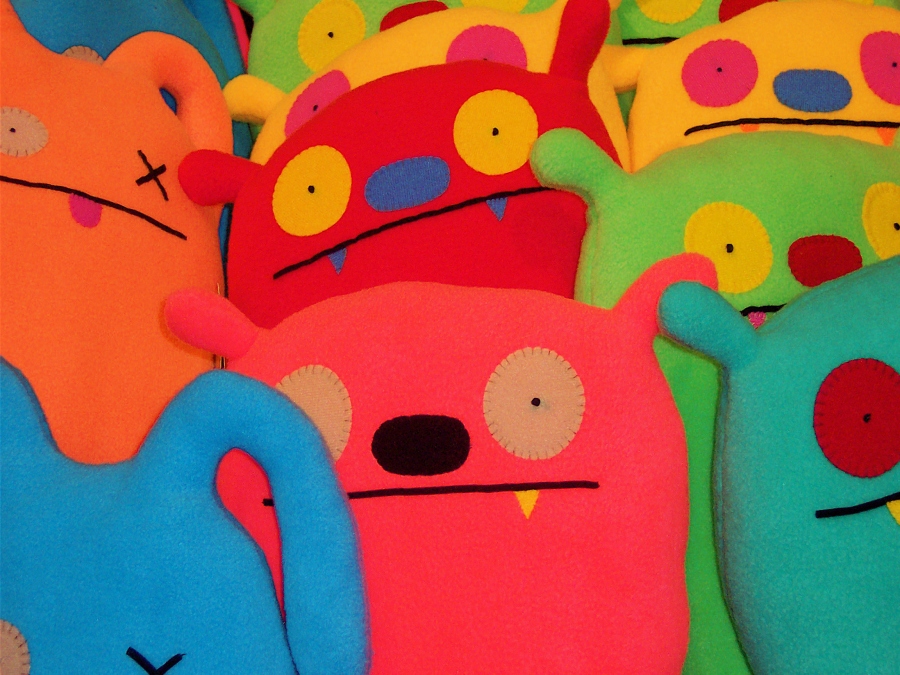
Ugly Dolls, a departure from the modern styling of dolls and plush animals involving plastic molds and intricate textile patterns, have revolutionized our reception and acceptance of oddity and eccentricity. This style of toy production harkens back to the simple and traditional fashioning of rag dolls. Construction of one’s own plaything is an activity that holds appeal for many. In this way, Ugly Dolls have restructured notions of beauty and perceptions of what is to be valued within a toy. I personally feel drawn towards the Ugly Doll brand. No longer is the beauty of a Barbie or the doe eyes of a prototypical teddy bear the immediate expectation of the North American market. The asymmetrical quality of this brand of toy as well as the strange quirks that accompany the individual dolls – from missing eyes to bloody fangs - give the ugly doll an unconventional charm. The Ugly Dolls offer a modified take on conventional production.

Saturday, April 23, 2011

Mobility of Music

The ability to listen to music using portable devices such as iPods, laptops, and mp3 players alters an individual’s perception and experience of reality. The mobility of music, facilitated by ongoing technological advancement, aurally transports us to wherever we choose; instead of dealing with our immediate realities, we can allow ourselves to be taken through time, space, and environment. The portability of technology has encouraged the state of information overload that we now habitually live within. Instead of paying attention to immediate concerns – the oncoming traffic, for instance – we now are preoccupied by peripheral ideas and sounds. The acoustic space in which we now live has placed an emphasis upon the importance of a world in which speech and listening are central. The long term effects of this shift in our daily perception of life is yet to be determined.
 

Red Letter Media Movie Reviews


The Plinkett Reviews on redlettermedia.com analyze well-known films that become a subject of close scrutiny and examination. Character development, plot, dialogue, as well as other aspects of a film are questioned and dissected. Films such as the Star Wars prequels and the Star Trek movies are assessed within a medium of film that closely resembles a video blog in terms of presentation and composition. These reviews are done in a way that references other pop culturally relevant topics. The reviewer cuts to different pictures, film clips, and sound bytes while the main focus is upon the subject matter of the film in question. This format caters to our customization to a narcotizing pulse and pace of images, sounds, and data. The reviewing of media texts has always taken place alongside an original piece of media. This particular form of review exhibits the way in which “we shape our tools and afterwards, our tools shape us.” The video blog relies on the tools of video, editing, as well as the Internet. Access to these tools shapes the way in which we relate to the creation and consumption of entertainment, altering our perception and understanding of humour, irony, and drama. One of the more recent Plinkett reviews focuses upon James Cameron’s Avatar. We now live in a global village – a simultaneous happening. Any one of the millions of people constituting the audience of Avatar can now relate to this associated piece of media.
 

Audrey Hepburn

  Audrey Hepburn, a female figure of iconic status, is inherently a subject of feminist criticism. Presented as a slight, doe-eyed personage evoking childhood innocence, it can be said that Audrey Hepburn sparked a return to a childlike feminine figure. The virginal and petite Audrey Hepburn is a stark contrast to the buxom blonde Marilyn Monroe. In terms of societal norms, this shift of aesthetic values may be considered detrimental to the safety and protection of children. Young girls specifically have become a larger target for sexual predators. It may be said that Audrey Hepburn’s childish demeanor and petite stature have contributed to the sexual deviance exhibited rampantly throughout society. A playgirl in Breakfast at Tiffany’s as well as a preyed upon widow in Charade, Audrey Hepburn has endeavoured to portray diverse female characterizations. Deviating from roles grounded within innocence and naivity, she has distanced herself from the persona of a virginal damsel. From this perspective, she has broken societal constraints of the female disposition.